
Brookwood Cemetery
Brookwood, Surrey
Edmund Baron Hartley (1847-1919)
Born in Devon on 6th May 1847 to Dr. Edmund Hartly and his wife Sophia, the younger Edmund became a clerk in the Inland Revenue in 1867 before leaving in 1869 to study medicine at St. George’s Hospital Medical School. In 1874, he travelled to South Africa to become the District Surgeon of British Basutoland, a position he held until three years later with the outbreak of the Basuto War, also known as the Morosi Rebellion (1879). He volunteered for service and became the Principal Medical Officer of the Cape Colonial Forces. During his service, he would earn the Victoria Cross. The citation reads: "For conspicuous gallantry displayed by him in attending the wounded, under fire, at the unsuccessful attack on Moirosi’s Mountain, in Basutoland, on the 5th June, 1879; and for having proceeded into the open ground, under a heavy fire, and carried in his arms, from an exposed position, Corporal A. Jones, of the Cape Mounted Riflemen, who was wounded. While conducting him to a place of safety the Corporal was again wounded. The Surgeon Major then returned under the severe fire of the enemy in order to dress the wounds of other men of the storming party.”
He continued in his role as Principal Medical Officer of the Cape Mounted Riflemen, as they had become known in August 1878, until his retirement in 1903, serving again in the Bechuanaland Rebellion of 1897 and the Second Anglo-Boer War (1899-1902). Following his retirement, he returned to Great Britain, and served as Commandant of Voluntary Aid Detachments in Somerset and as Secretary of the Voluntary Aid Hospital during the First World War. He died on 20th March 1919 at the age of 71.
Restored by Military Grave Restorers. Research by David Wells
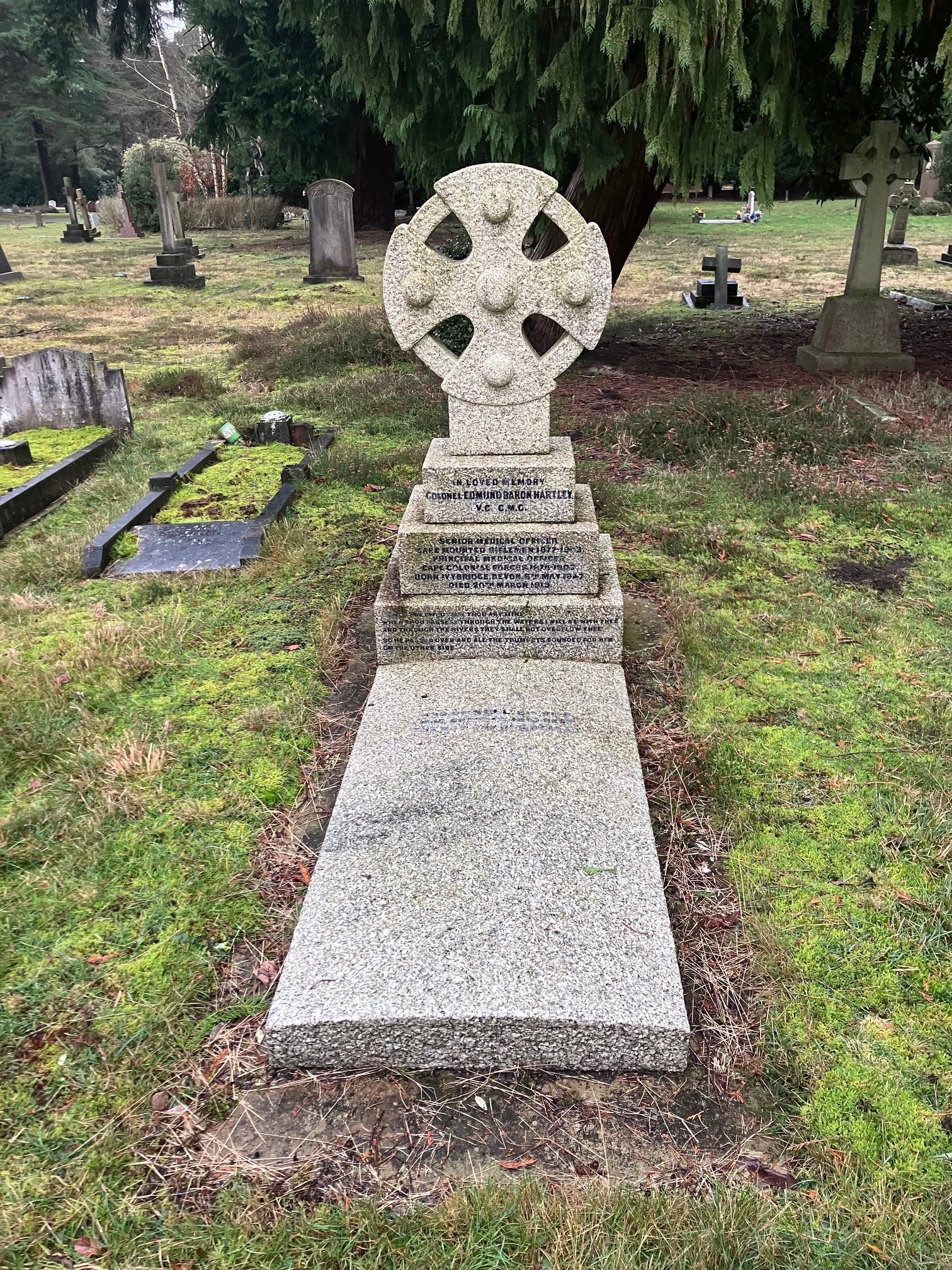
Before
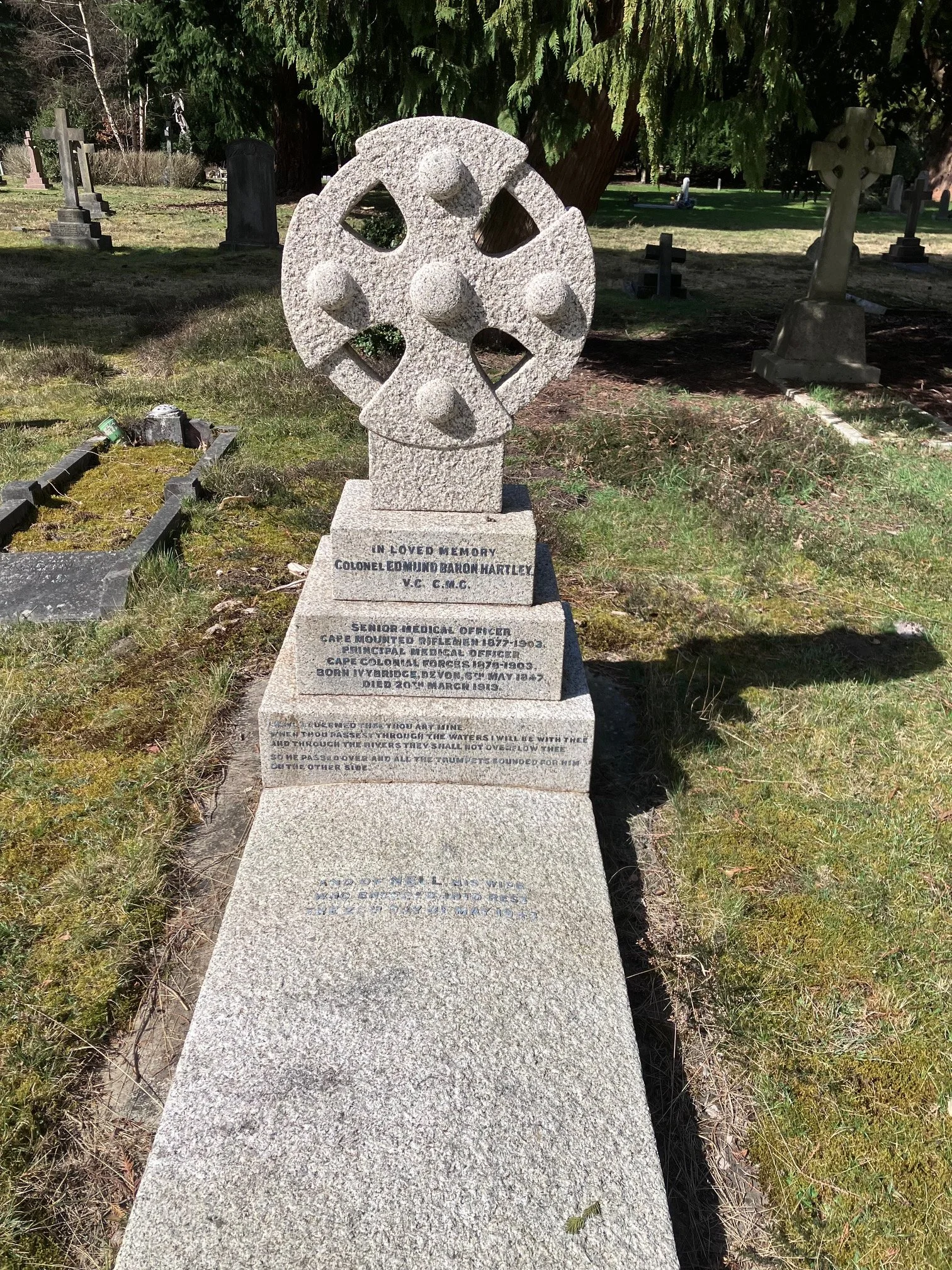
After
James Hollowell (1823-1876)
Private Hollowell was awarded his VC for actions during the Siege of Lucknow in the Indian Mutiny on 26th September 1857. Whilst trapped in a house with nine other men, he successfully encouraged and led his fellows in defence of their position, despite the fact that the house was on fire, shooting through the windows. Hollowell eventually rose to the rank of Lance Corporal.
Restored by Military Grave Restorers. Research by David Wells
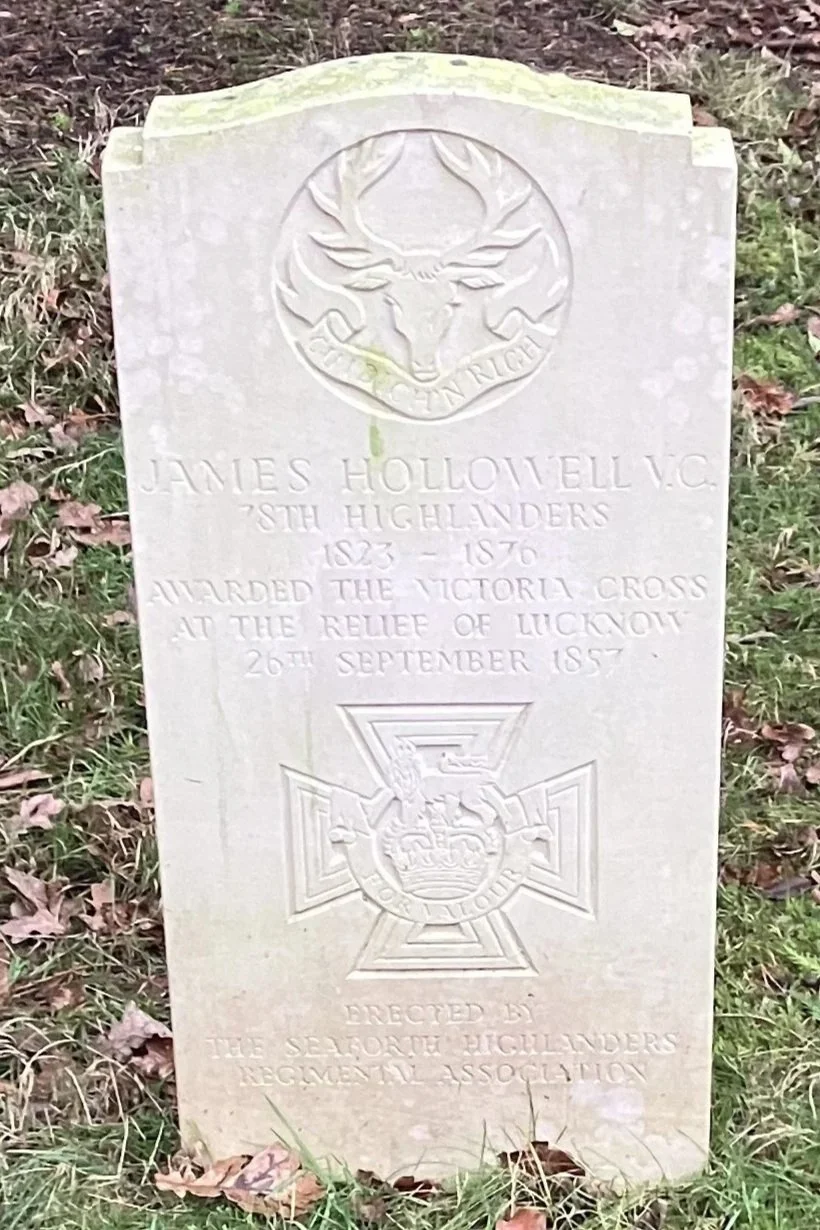
Before
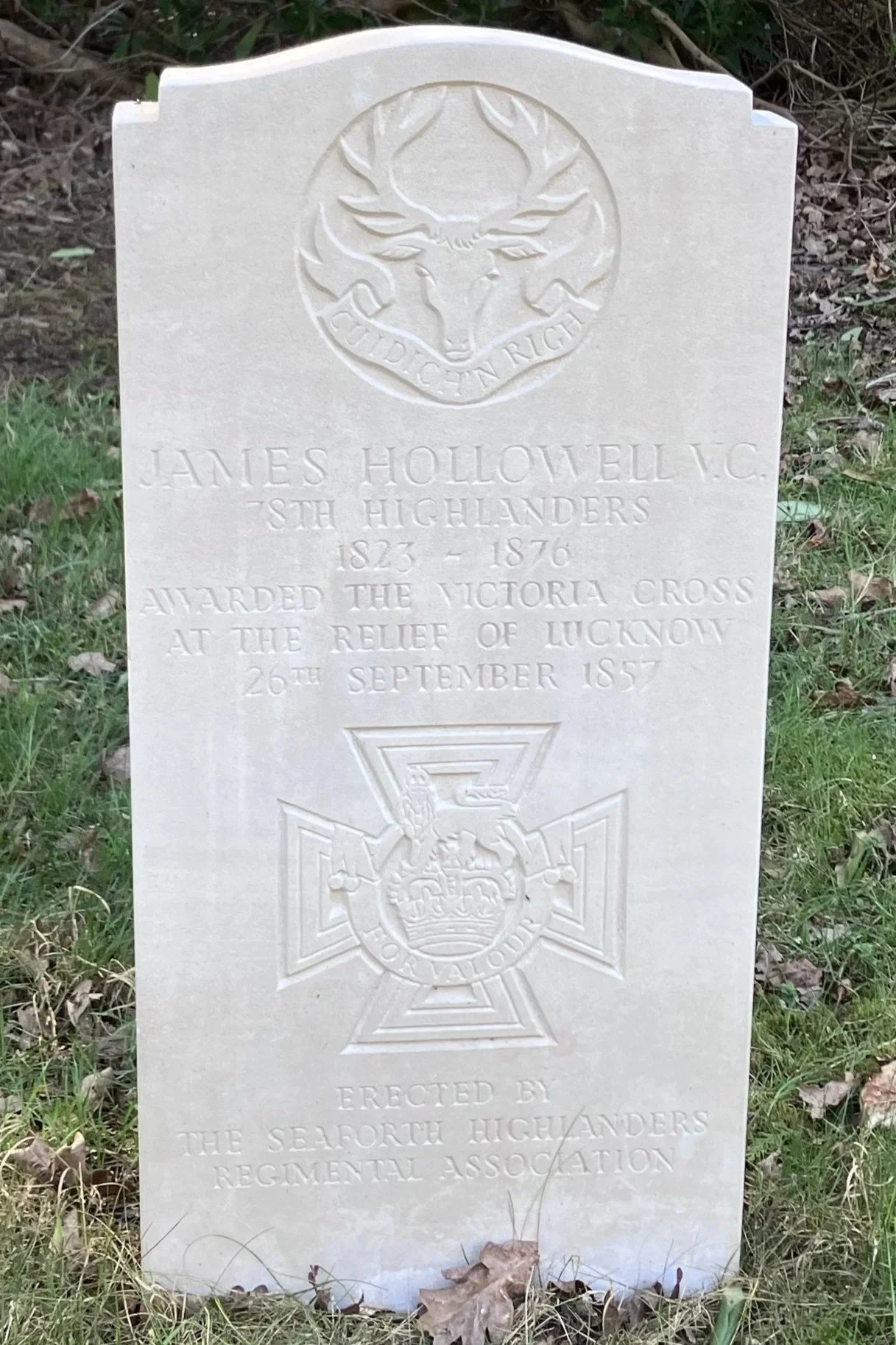
After
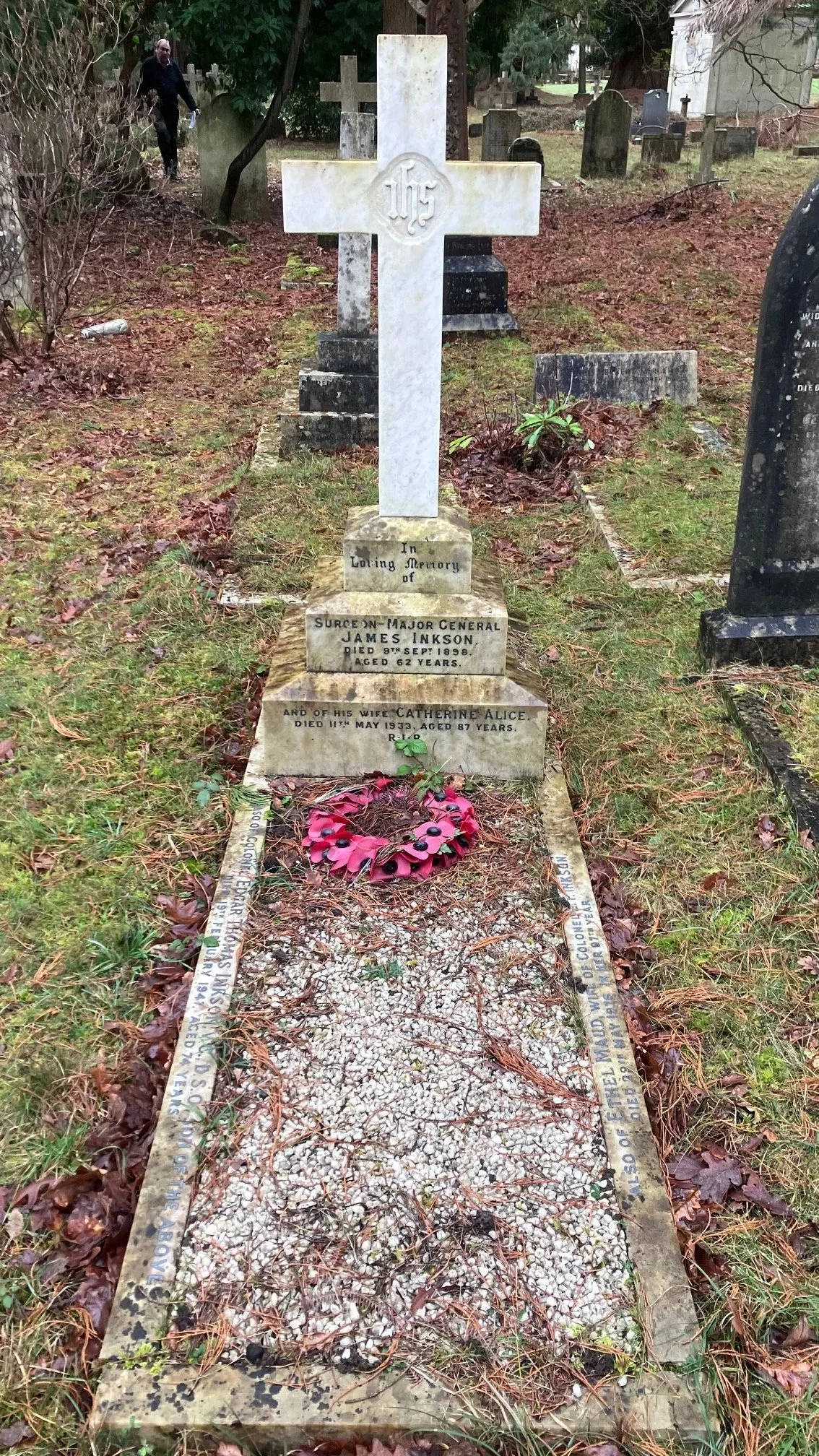
Before
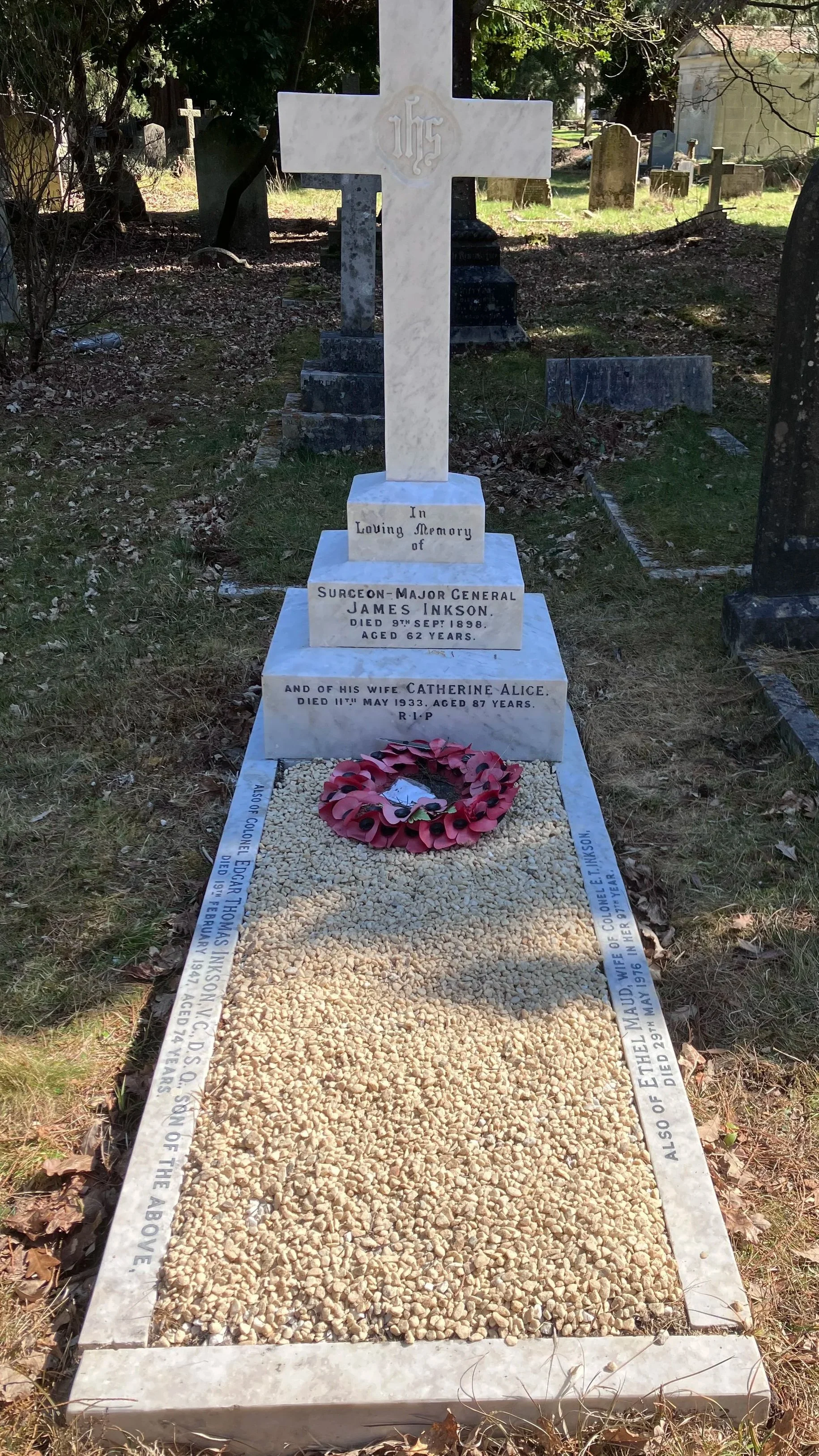
After
Edgar Thomas Inkson VC DSO (1872-1947)
Born on 5th April 1872 in Naini Tal, India, the son of Surgeon General James Inkson and his wife Catherine, he was educated in Edinburgh and later at University College Hospital, London. He joined the Royal Army Medical Corps and rose to the rank of 2nd Lieutenant shortly before the outbreak of the 2nd Anglo-Boer War (1899-1902), during which he was attached to the Royal Inniskilling Fusiliers. He was awarded the VC for his actions at Hart’s Hill, then called Terrace Hill, overlooking the Tugela River in what is now KwaZulu-Natal, on 24th February 1900. The Inniskilling Fusiliers suffered heavy casualties during their assault on this position on the 23rd, with fighting continuing to the next day. Inkson’s citation reads: “On the 24th February, 1900, Lieutenant Inkson carried Second Lieutenant Devenish (who was severely wounded and unable to walk) for three or four hundred yards under a very heavy fire to a place of safety. The ground over which Lieutenant Inkson had to move was much exposed, there being no cover available.” He was later promoted to Captain during the 2nd Boer War. During his service in the First World War, he was mentioned twice in Despatches and was awarded the Distinguished Service Order in 1917. He finally retired in 1926 and eventually died on 19th February 1947 at Chichester Hospital, West Sussex.
Restored by Military Grave Restorers. Research by David Wells
Horace Robert Martineau (1874-1916)
This monument is a commemoration of Lieutenant Martineau on his family grave and he is, in fact, buried in Dunedin, New Zealand. Horace Martineau was born in Bayswater, London on 31st October 1874 and was later educated at University College School, London. Joining the 11th Hussars in 1891, he served in Natal and India, before obtaining a discharge and returning to South Africa in 1895. He served under Colonel Baden-Powell in the Matabele Campaign in 1896 and later joined the Cape Police, before joining the Protectorate Regiment , with which he served during the Second Anglo-Boer War (1899-1902). It was during this campaign, in the defence of Mafeking, that his actions earned him the Victoria Cross. The citation reads: “On the 26th December, 1899, during the fight at Game Tree, near Mafeking, when the order to retire had been given, Sergeant Martineau stopped and picked up Corporal Le Camp, who had been struck down about 10 yards from the Boer trenches, and half dragged, half carried, him towards a bush about 150 yards from the trenches. In doing this Sergeant Martineau was wounded in the side, but paid no attention to it, and proceeded to stanch and bandage the wounds of his comrade, whom he, afterwards, assisted to retire. The firing while they were retiring was very heavy and Sergeant Martineau was again wounded. When shot the second time he was absolutely exhausted from supporting his comrade, and sank down unable to proceed further. He received three wounds, one of which necessitated the amputation of his arm near the shoulder.”
Following this, he retired from service and took up civilian employment in Durban, eventually moving to New Zealand, where he was living when the First World War broke out. He volunteered immediately and served as a Lieutenant with the ANZAC Transport Service at Suez and Gallipoli during the First World War. It was in Gallipoli that he contracted a fever and was invalided back to New Zealand, dying on 8th April 1916 as a result of his illness.
Restored by Military Grave Restorers. Research by David Wells
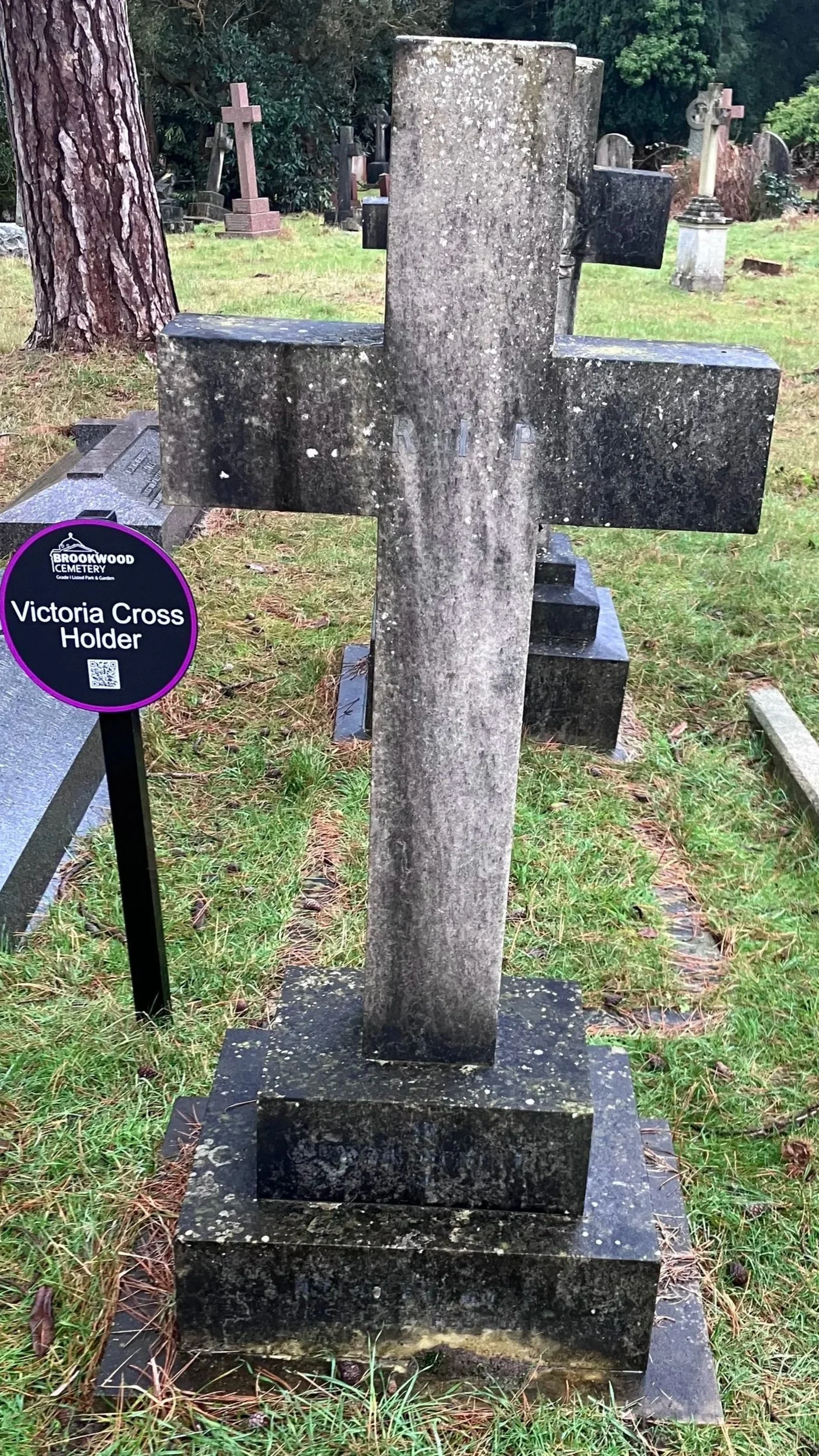
Before
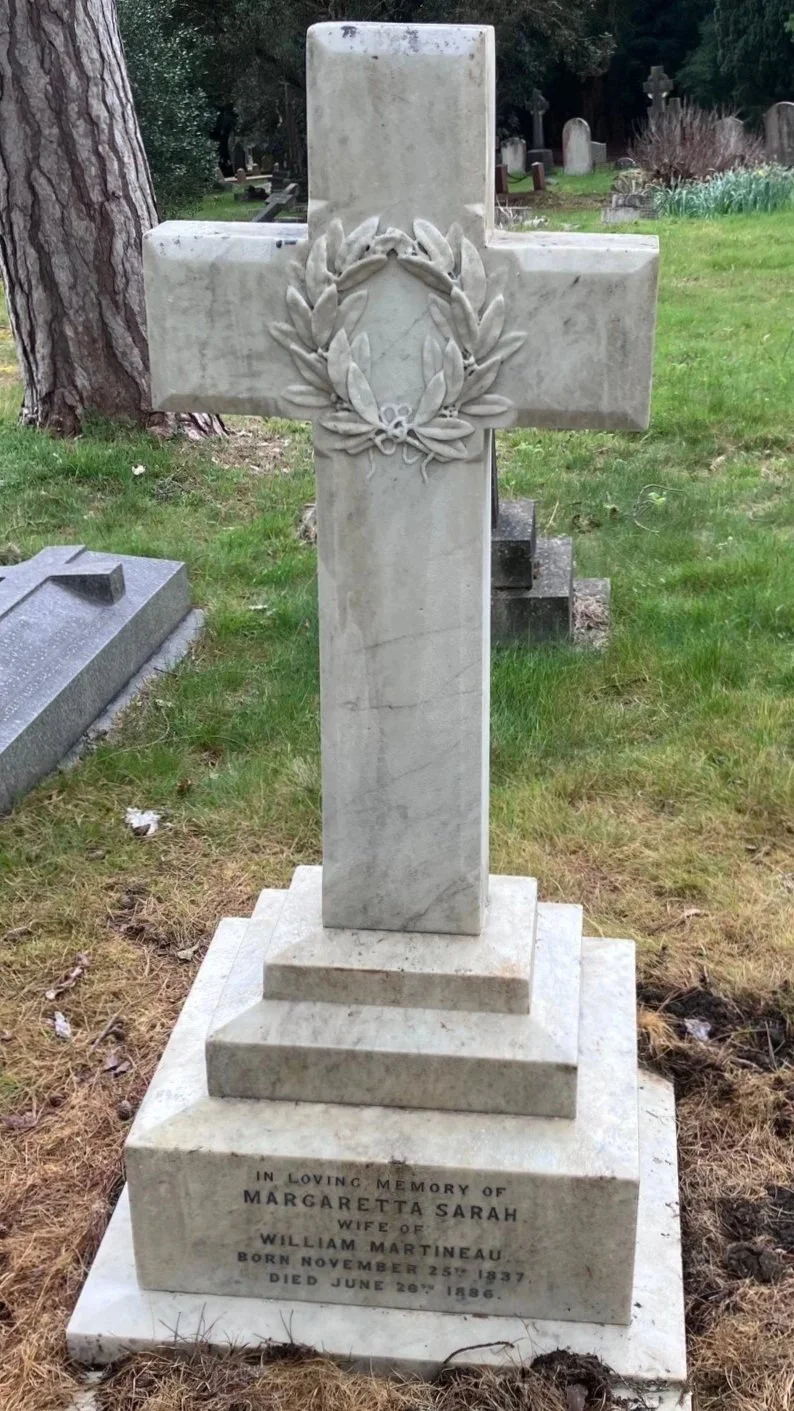
After
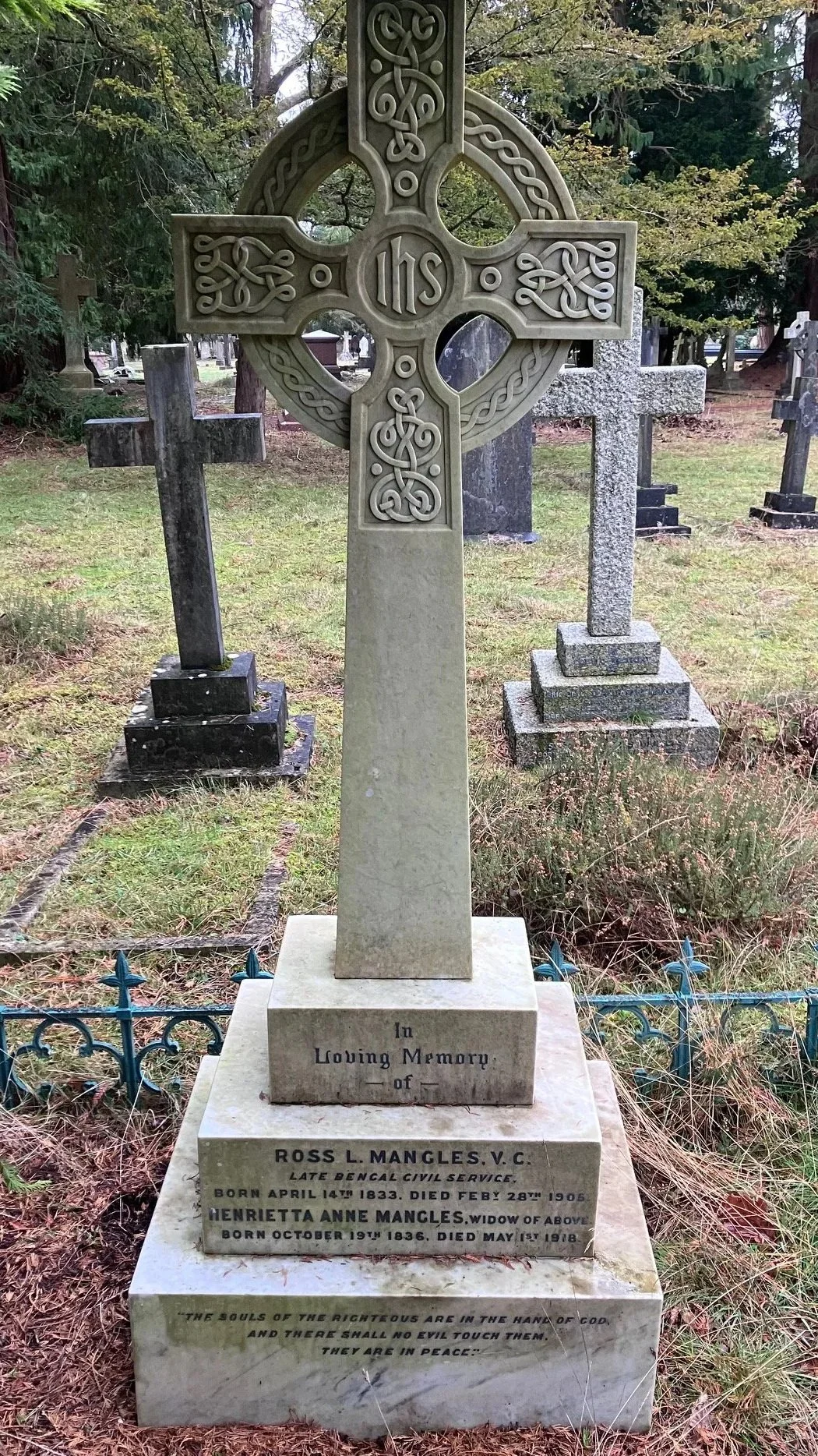
Before
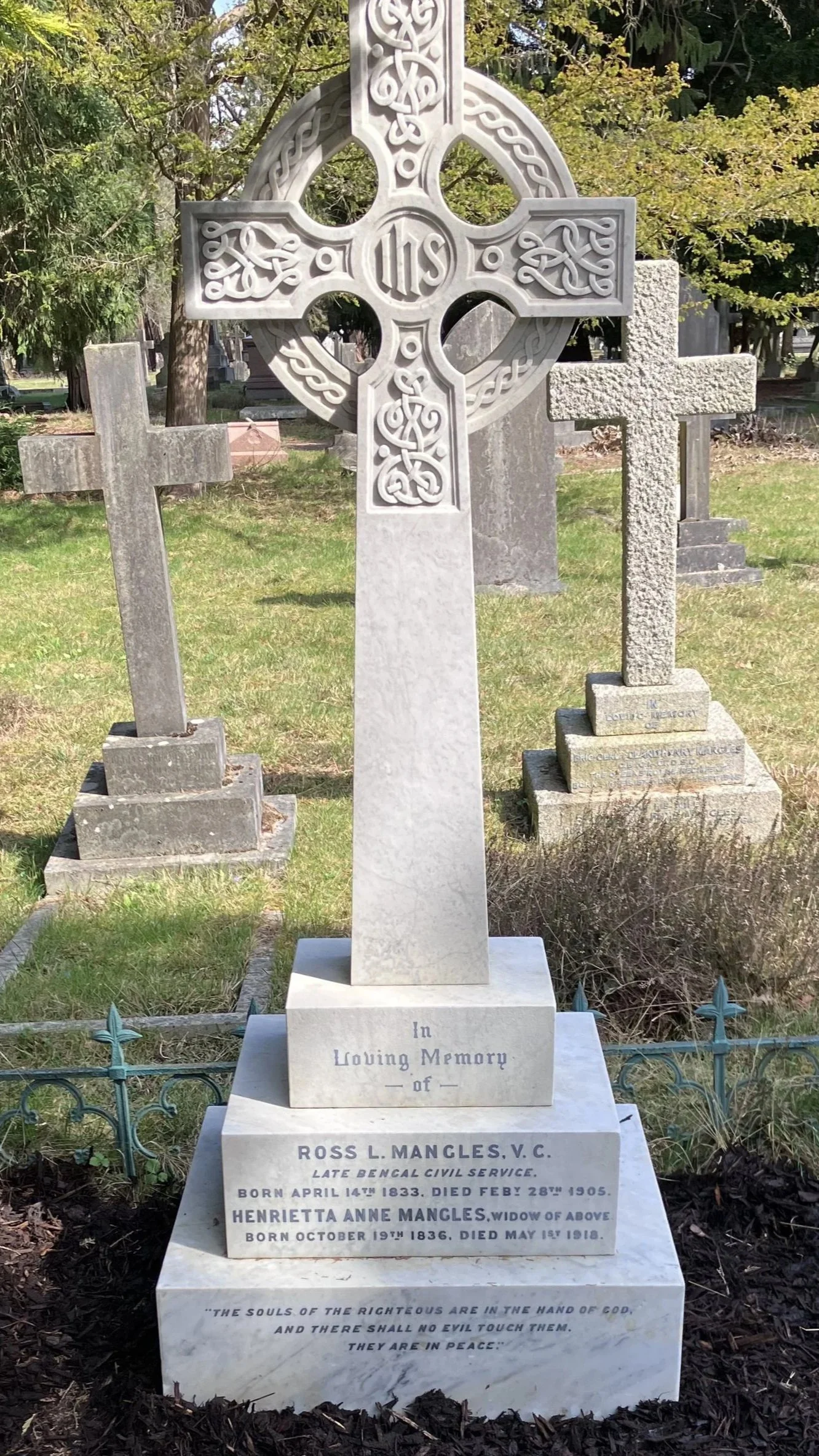
After
Ross Lowis Mangles (1833-1905)
Born in Calcutta, Mr. Mangles is one of seven civilians to date to be awarded the Victoria Cross. He was born on 14th April 1833, the son of Ross and Harriet Mangles. The younger Ross was educated at Windlesham House School, Bath Grammar School and Haileybury College He joined the Bengal Civil Service in 1853 and served as Assistant Magistrate at Patna until 1857. That year saw the great Indian Mutiny and Mr. Mangles was caught in the Siege of Arrah
“Mr Mangles volunteered and served with the Force, consisting of detachments of Her Majesty’s 10th and 37th Regiments, and some Native Troops, despatched to the relief of Arrah, in July 1857, under the Command of Captain Dunbar of the 10th Regiment. The Force fell into an Ambuscade on the night of the 29th of July 1857, and during the retreat on the next morning, Mr Mangles, with signal gallantry and generous self-devotion, and notwithstanding that he himself had been previously wounded, carried for several miles out of action a wounded soldier of Her Majesty’s 37th Regiment, after binding up his wounds under a murderous fire, which killed or wounded almost the whole detachment; and he bore him in safety to the boats.”
Following this expedition, Mr. Mangles became Magistrate in the Chunparun district in Northern Behar, where he saw further action at Jenan in 1858. A special amendment was required to the warrant for the Victoria Crosses for it to be awarded to Mr. Mangles and William McDonell, as civilians were not included in the original wording. He was personally invested with his Victoria Cross by Queen Victoria herself at Windsor Castle during some time he spent in England on Sick Leave between September 1858 and January 1860. He served in a variety of other positions in the Colonial Indian government, including as Judicial Commander of Mysore and Coorg and Secretary to the Government of Bengal, before he retired in 1883. Mr. Moss died on 28th February 1905 in Pirbright, Surrey at the age of 71.
Matthew Fountaine Maury Meiklejohn (1870-1913)
Born in Clapham, London to professor John Meiklejohn and his wife Jane, Matthew was educated at Fettes College and Sandhurst and he joined the Gordon Highlanders in 1891, seeing service with the Chitral Relief Force in 1895 and the Tirah Expedition in 1897, rising to the rank of Captain in 1899. He went on to serve during the 2nd Anglo-Boer War (1899-1902) where he would be awarded the VC: “At the Battle of Elandslaagte on the 21st October, 1899, after the main Boer position had been captured, some of the men of the Gordon Highlanders, when about to assault a kopje in advance, were exposed to a heavy cross-fire and, having lost their leaders, commenced to waver. Seeing this, Captain Meiklejohn rushed to the front and called on the Gordons to follow him. By his conspicuous bravery and fearless example, he rallied the men and led them against the enemy’s position, where he fell, desperately wounded in four places.” He was one of the last recipients of the VC to be personally presented with the award by Queen Victoria herself.
Unfortunately, due to the wounds he received, his right arm had to be amputated, but he went on to become a well-regarded Staff Officer, moving to the War Office in 1909, to the department of the Director of Military training, eventually obtaining the rank of Major. Major Meiklejohn met an unfortunate end on 4th July 1913, when his horse was startled during an OTC inspection in Hyde Park. The horse galloped towards a group of children and the Major turned his horse against some railings. He was thrown off and knocked unconscious, never regaining consciousness. His death was reported in the Press as an act of heroic self-sacrifice. He was buried with full Military Honours. He is also commemorated in a plaque on the wall of the Knightsbridge Barracks, with details of his death, noting that “He gave his life to save others”.
Restored by Military Grave Restorers. Research by David Wells
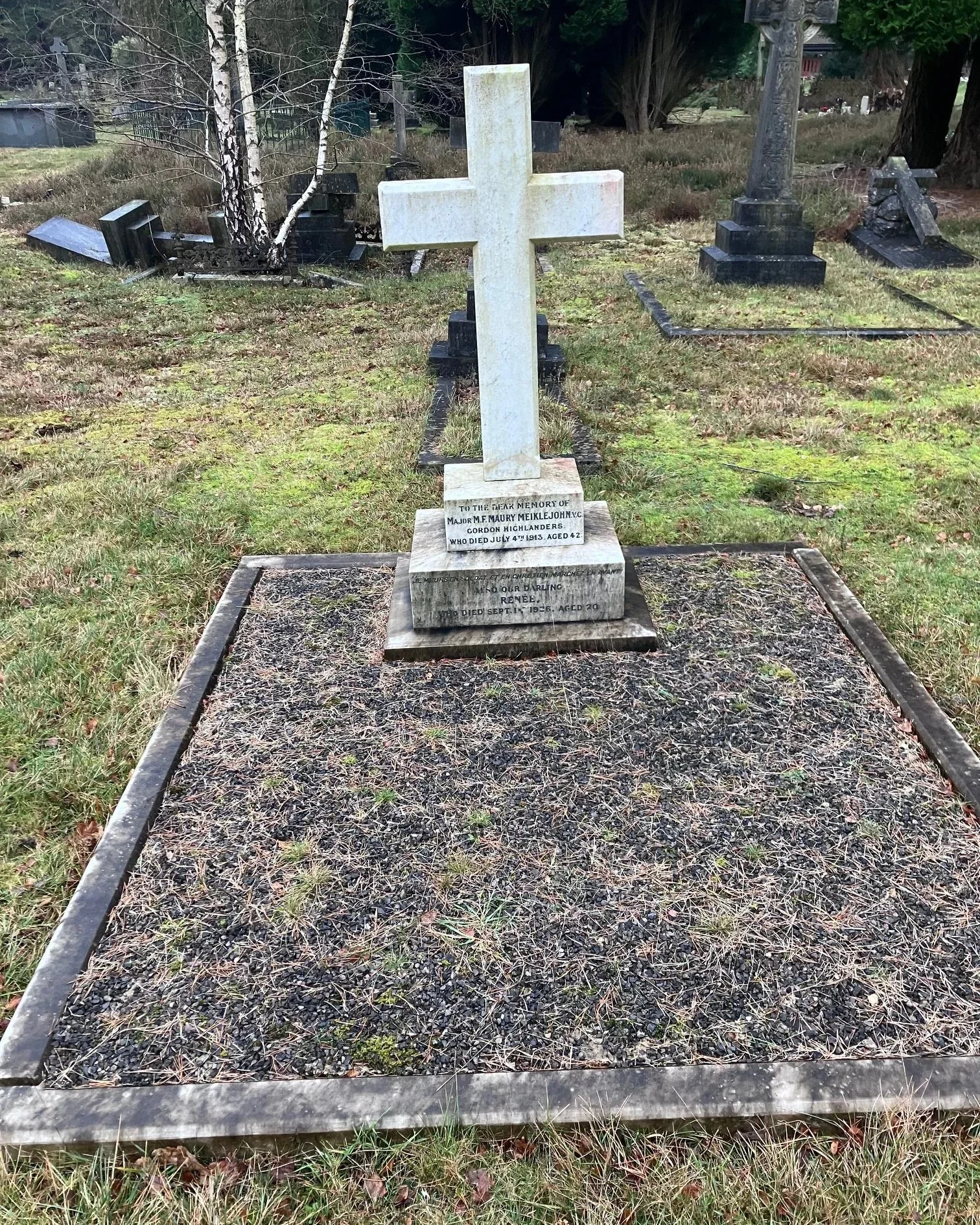
Before
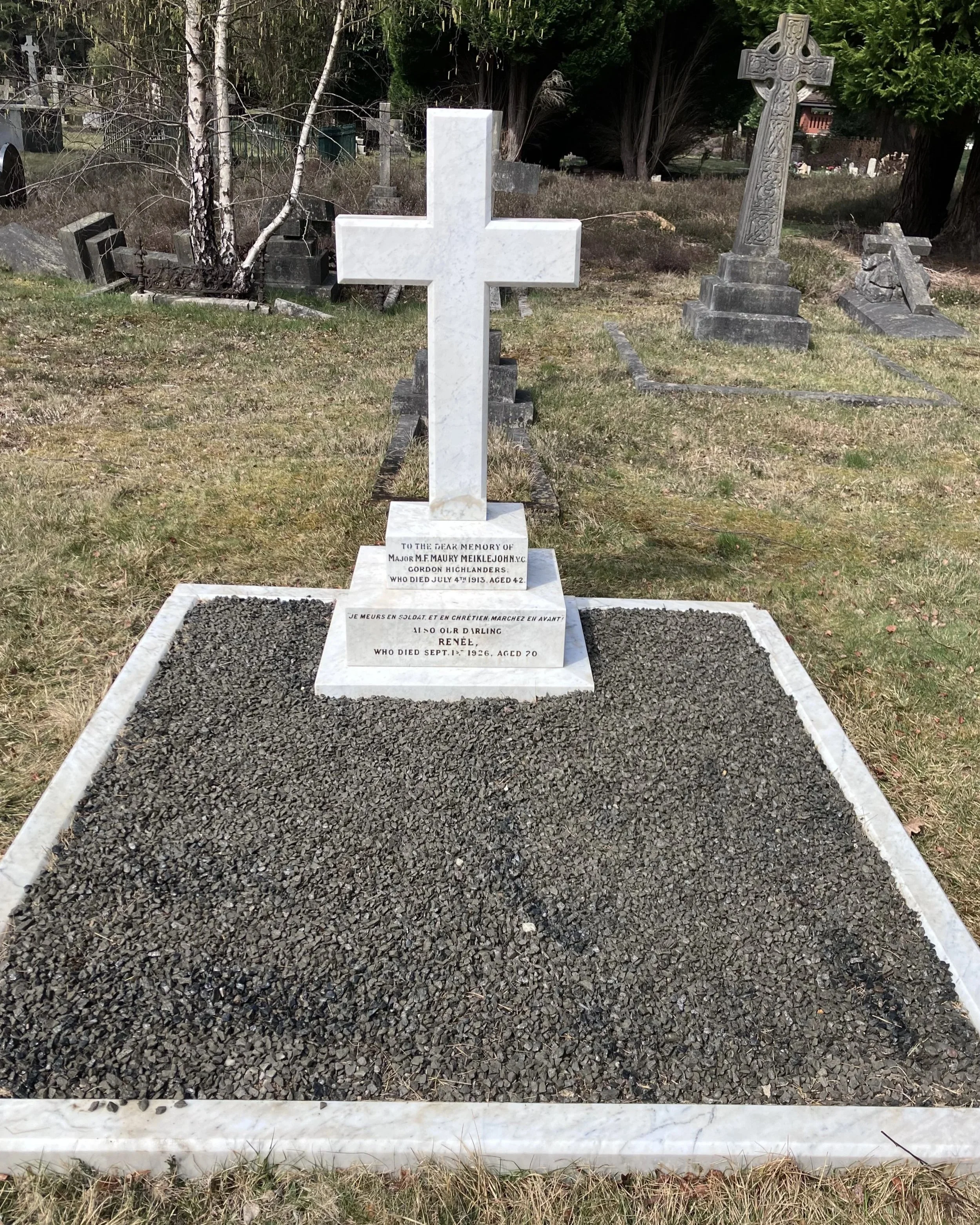
After
Wallace Duffield Wright VC CB CMG DSO (1875-1953)
Born in Gibraltar on 20th September 1875 to James and Mary Wright, he was commissioned into the 1st Battalion of The Royal West Surrey Regiment on 9th December 1896, serving in the Malakand Field Force and the Tirah Expeditionary Force (1897-1898). He was promoted to Lieutenant on 13th September 1898. In 1901 he was sent to serve in the Northern Nigeria Regiment and was promoted to Captain on 22nd January 1903 and saw action in the Kano-Sokoto Campaign (1903) where the VC was awarded for his gallantry: “On the 24th March, 1903, Lieutenant Wright, with only one Officer and 44 men, took up a position in the path of the advancing enemy, and sustained the determined charges of 1,000 Horse and 2,000 Foot for two hours, and when the enemy, after heavy losses, fell back in good order, Lieutenant Wright continued to follow them up till they were in full retreat. The personal example of this Officer, as well as his skilful leadership, contributed largely to the brilliant success of this affair. He in no way infringed his orders by his daring initiative, as, though warned of the possibility of meeting large bodies of the enemy, he had purposely been left a free hand.”
During the First World War, he served with the Queen’s Own Cameron Highlanders and, between 1918 and 1922, was in command of the 8th Infantry Brigade as a Brigadier-General. He moved into politics, becoming Member of Parliament for Tavistock following a by-election in1928. He was re-elected in the General Election of 1929 but stood down in 1931. From 1932 to 1950, he was a member of the Honourable Corps of Gentlemen-at-Arms and served in the Home Guard during the Second World War. He died at Chobham, Surrey on 25th March 1953.
Restored by Military Grave Restorers. Research by David Wells
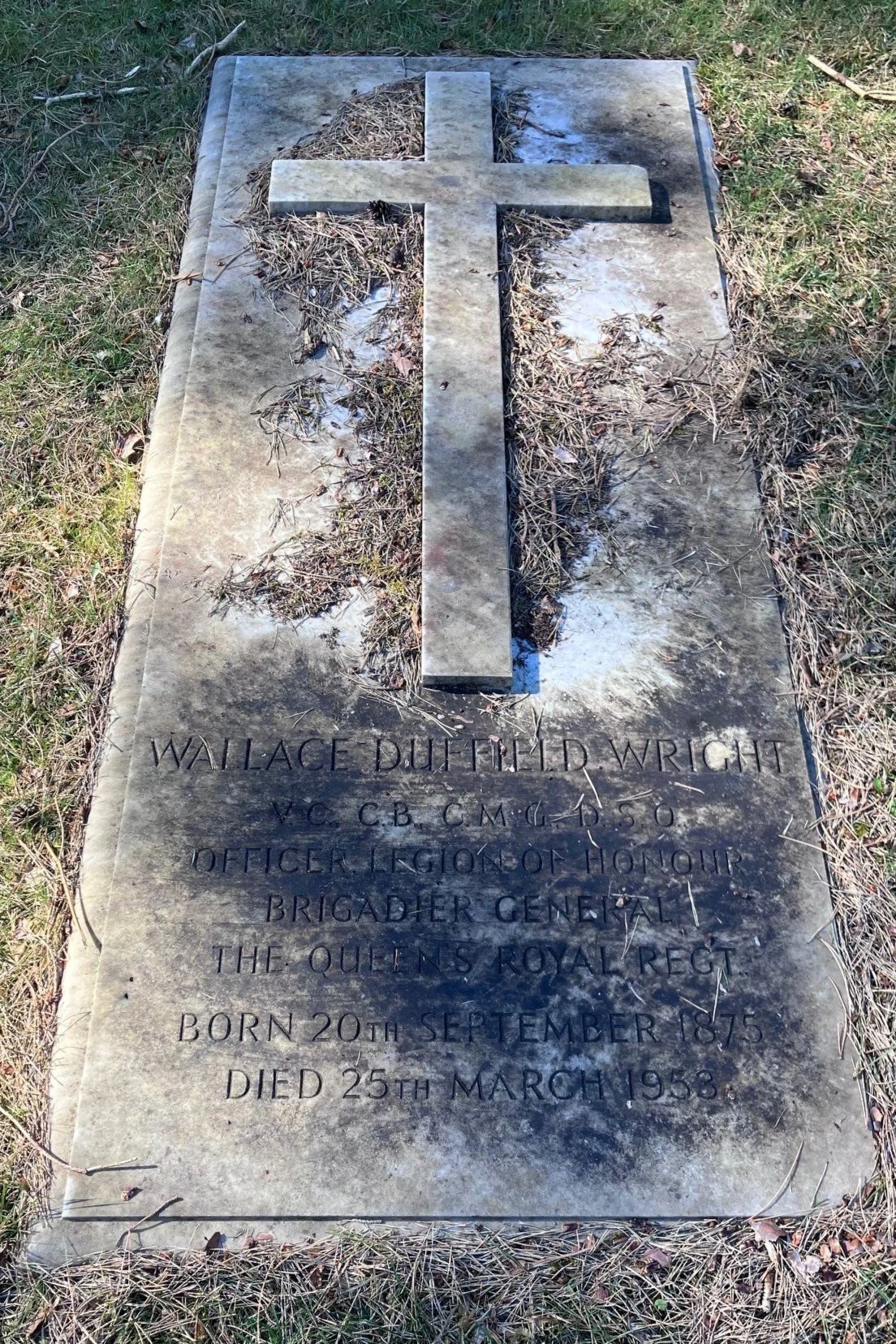
Before
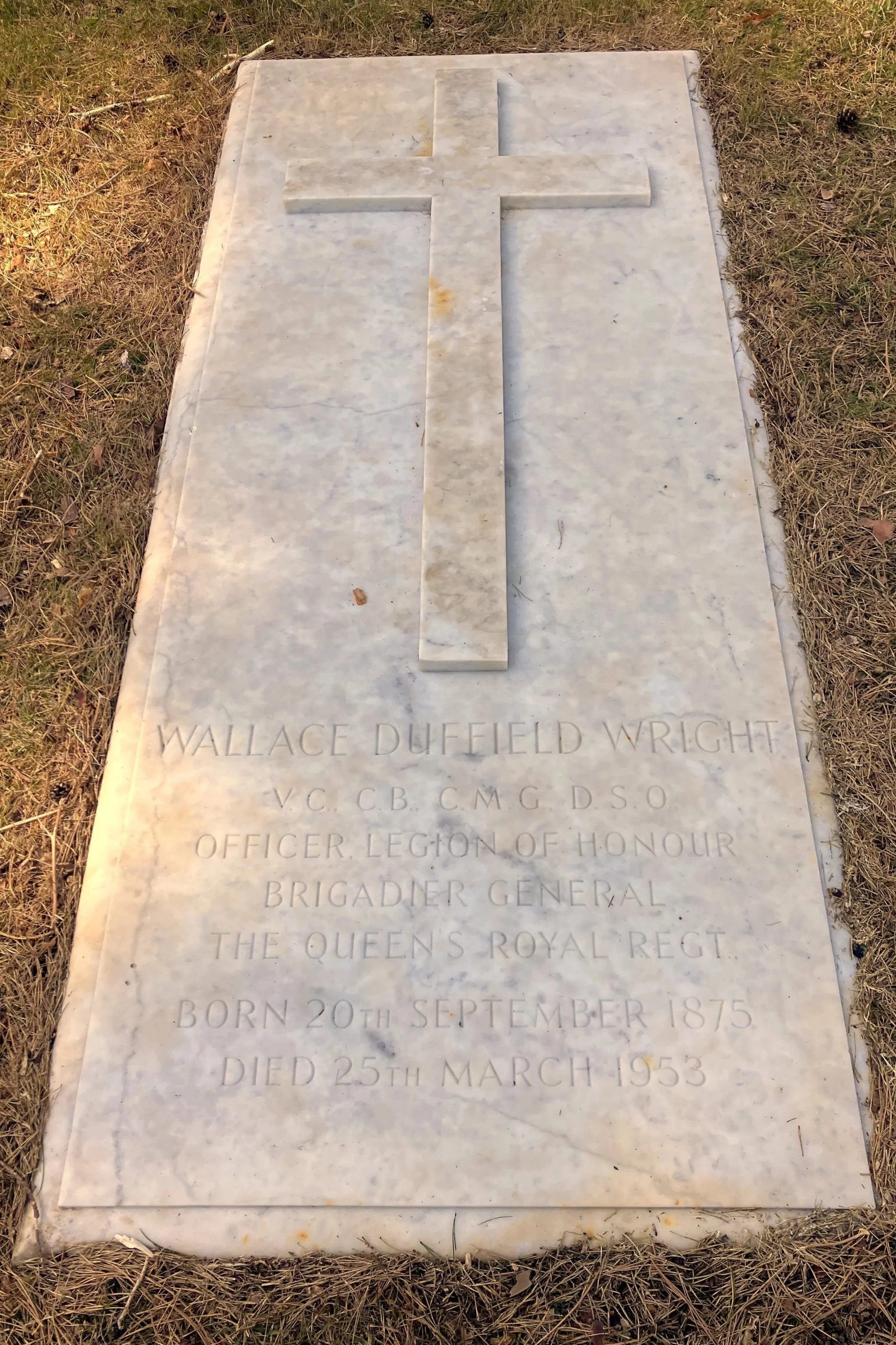
After
Wallace Duffield Wright VC CB CMG DSO (1875-1953)
A direct descendant of Scottish heroine Flora MacDonald, who famously assisted Jacobite Bonnie Prince Charlie in his escape after the Battle of Culloden, Flora MacDonald Bewick was born on 4th December 1892 at Savannah, Georgia, USA. The stepdaughter of USA Army Brigadier-General Edward Terence Donnelly, who served in France during World War One, Flora met Brigadier General Wallace Duffield Wright VC CB CMG DSO in Paris, while she convalesced from a broken arm injury sustained while she was driving an ambulance in Northern France for the WW1 effort. They married 9 Aug 1919 at the American Church of the Holy Trinity in Paris.
Restored by Military Grave Restorers. Research by Hilary Challis
