
Matthew Latham’s Obelisk
Blingel, Pas-de-Calais
This obelisk, located in Blingel, France, marks the last resting place of Captain Matthew Latham, the hero of the Battle of Albuera (1811) during the Peninsular War. Latham first joined the army in 1805, rising to the rank of Lieutenant in 1807. A member of the 3rd Regiment of Foot (the Buffs), the then Lieutenant Latham fought bravely in a battle that saw over 83% of his regiment killed. The French enemy attempted to capture the Regimental Colours and Latham risked himself to save them. This act of bravery saw him wounded several times by French Lancers during the struggle over the flag, losing not only his left arm but also a significant part of his cheek and the majority of his nose. Latham was, however, able to stuff the colours in his jacket before his foe finally knocked him unconscious on the ground. Latham was found, along with the colours, and thought dead, but he regained consciousness and was found by another group of soldiers to be alive when he tried to crawl to a stream to drink. Despite the severity of his injuries, he survived and continued his service in the Buffs.
He was presented to the Prince Regent, later George IV, whilst the Buffs were stationed at Brighton in 1815 and the Prince, impressed by Latham, paid for him to undergo reconstructive surgery on his nose, which was carried out by Joseph Carpue, making Latham the first British soldier to undergo such an operation. Latham retired to France and married, eventually dying on 27th April 1865 at the age of 79.
The Trust was approached by the Princess of Wales’s Royal Regiment, the successor of the 3rd Regiment of Foot, and the Charity was pleased to completely fund the restoration of this memorial, as well as erecting new information boards in the cemetery to educate visitors about Latham’s exploits. Several of the Charity’s trustees attended the official unveiling ceremony, which was also attended by a large contingent from the Princess of Wales’s Royal Regiment
Restoration by Sarah Garel-Laurin, Research by David Wells
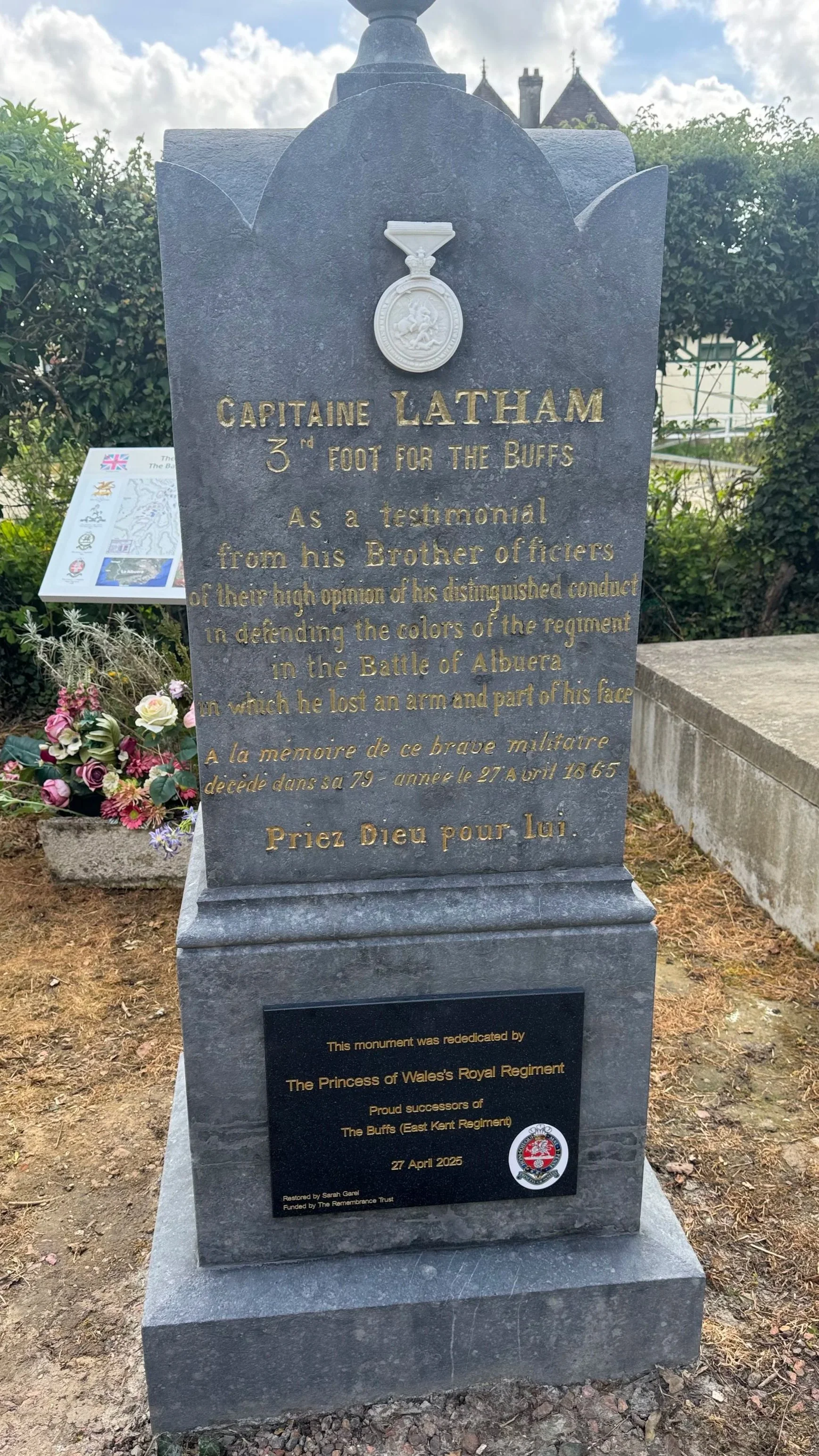
After
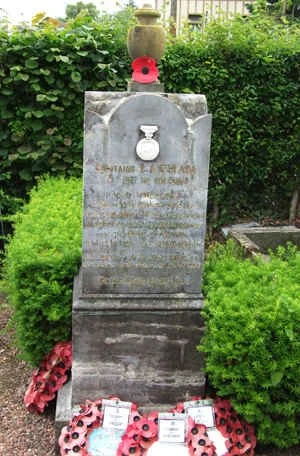
Before
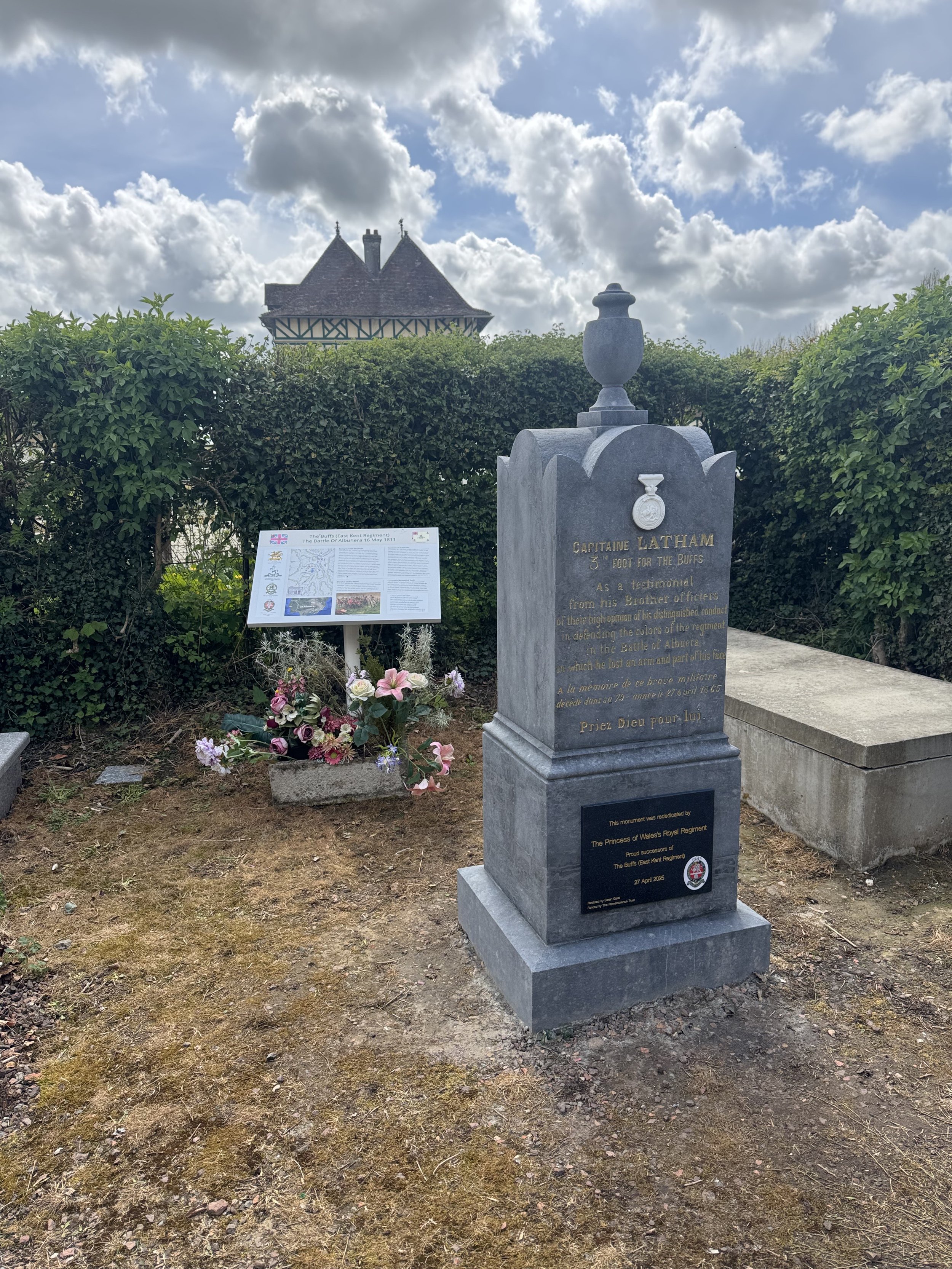
After
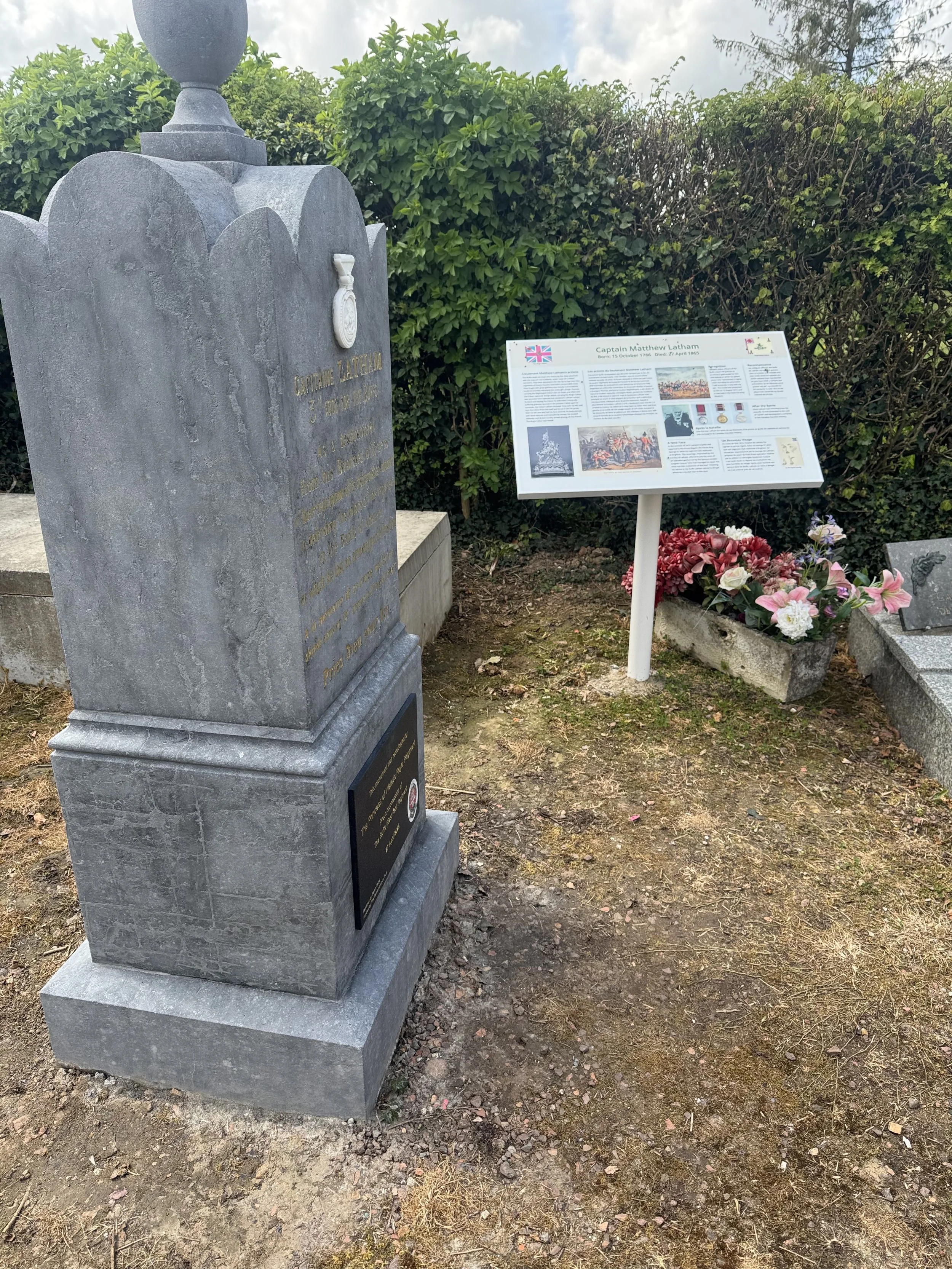
After